
Key Takeaways
- 1 inch = 25.4 mm exactly. Divide mm by 25.4 for decimal inches; multiply inches by 25.4 for mm.
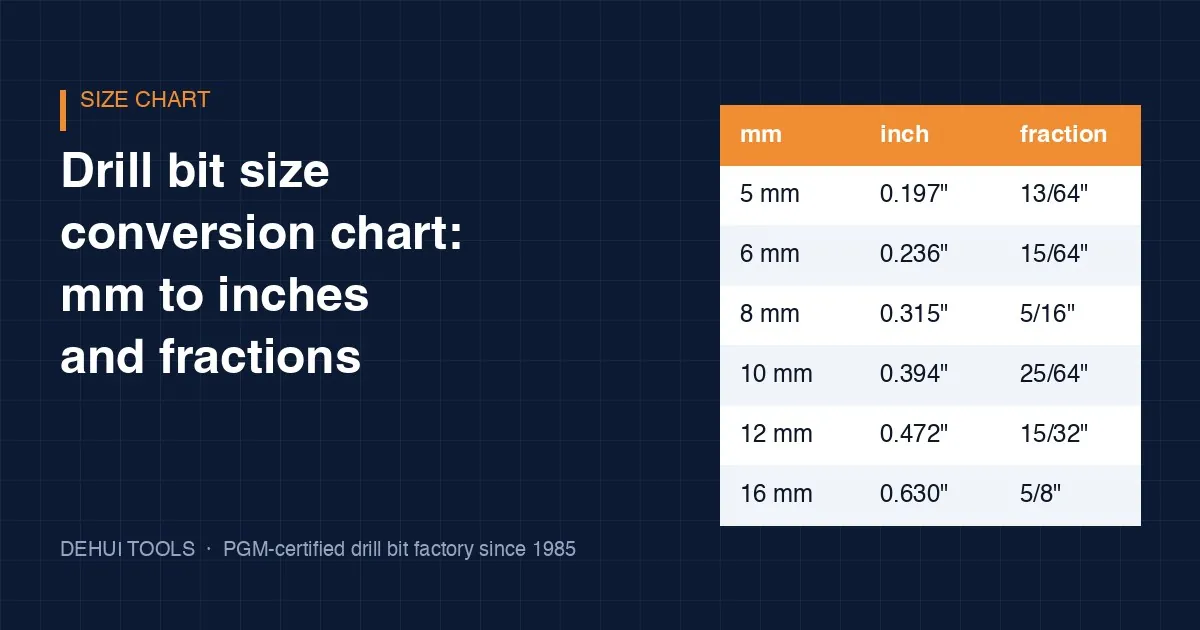
- Quick answers: 5 mm ≈ 13/64" (0.197"), 6 mm ≈ 15/64" (0.236"), 8 mm ≈ 5/16" (0.315"), 10 mm ≈ 25/64" (0.394"), 12 mm ≈ 15/32" (0.472").
- Masonry and SDS bits are sold in a coarser inch series (1/8, 5/32, 3/16, 1/4, 5/16, 3/8 …), so the closest inch masonry bit can be 0.3–0.7 mm away from the metric size.
- For wood, metal clearance holes and plastic plugs a ±0.3 mm substitute is usually fine. For approved anchors it is not — drill the size printed on the anchor.
- 8 mm, 16 mm and 19 mm are the metric sizes that land almost exactly on an inch size (5/16", 5/8", 3/4").
Short answer: 1 inch is exactly 25.4 mm, so divide a metric size by 25.4 to get decimal inches. The sizes people ask about most: 5 mm = 0.197” (≈ 13/64”), 6 mm = 0.236” (≈ 15/64”), 8 mm = 0.315” (≈ 5/16”), 10 mm = 0.394” (≈ 25/64”) and 12 mm = 0.472” (≈ 15/32”). Below are two full charts — metric to inch (3–40 mm) and inch to metric (1/16”–1-1/2”) — with the actual difference in millimetres, which is the number that decides whether a substitute bit is good enough.
Last Updated: 2026-10-24
Why this chart has a “difference” column
Most conversion charts stop at “8 mm ≈ 5/16”“. That answer is fine for a pilot hole in pine. It is not fine when the hole has to hold a wall plug, a concrete screw or an expansion anchor, because those are designed around one hole diameter and lose holding power when the hole is a few tenths of a millimetre too big.
For a masonry drill bit, the practical question is rarely “what is 8 mm in inches”. It is “I have an inch anchor and a box of metric bits — will it work?” The difference column answers that: positive means the inch bit drills bigger than the metric bit, negative means smaller.
Two more details matter for masonry work:
- Masonry and SDS bits use a coarser inch series than twist drills. HSS twist drills come in 1/64” steps up to 1/2”. Carbide masonry and SDS bits are normally sold in 1/8, 5/32, 3/16, 7/32, 1/4, 5/16, 3/8, 7/16, 1/2 and so on. So the nearest inch masonry bit is often further from your metric size than the nearest fraction.
- A carbide bit drills a hole slightly larger than its nominal size. The tip is ground a little over nominal so the hole still fits the anchor after the tip wears. How much over is controlled by test specifications such as PGM, which is why anchor makers ask for certified bits. A worn or badly ground bit adds more on top of the conversion error.
Metric to inch drill bit chart (3–40 mm)
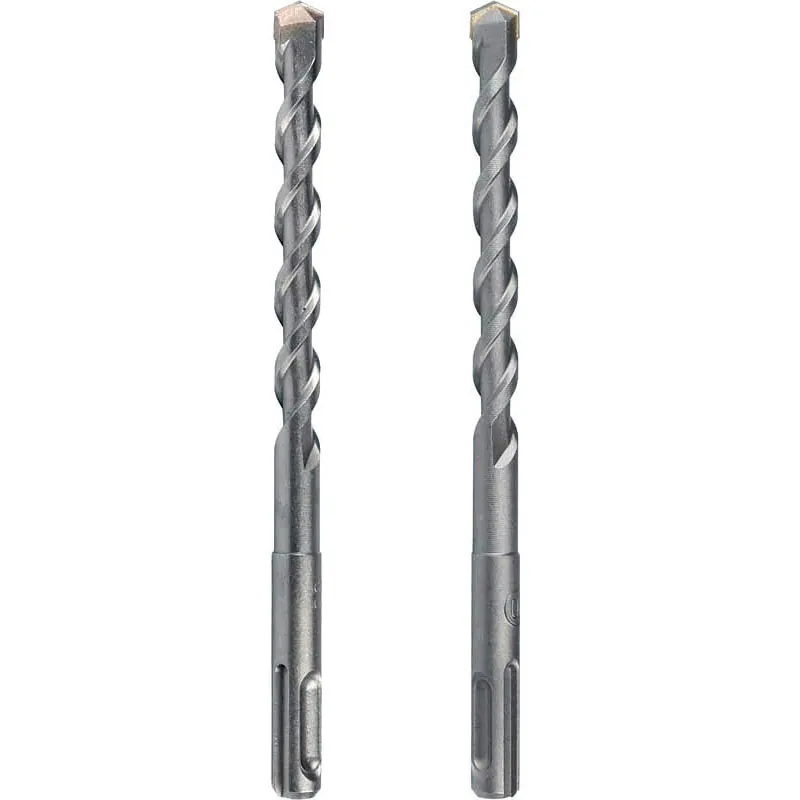
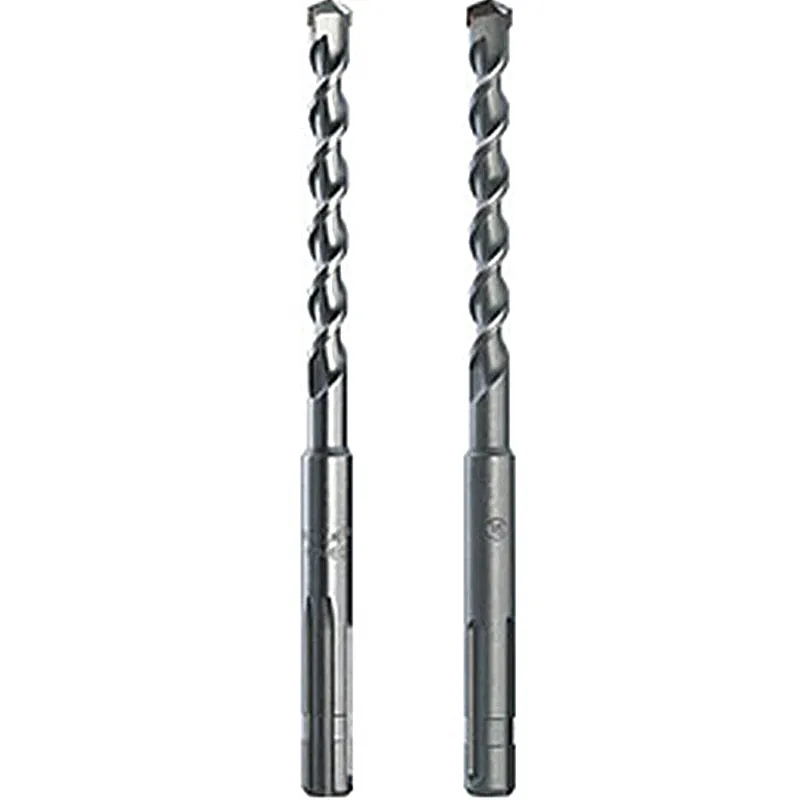
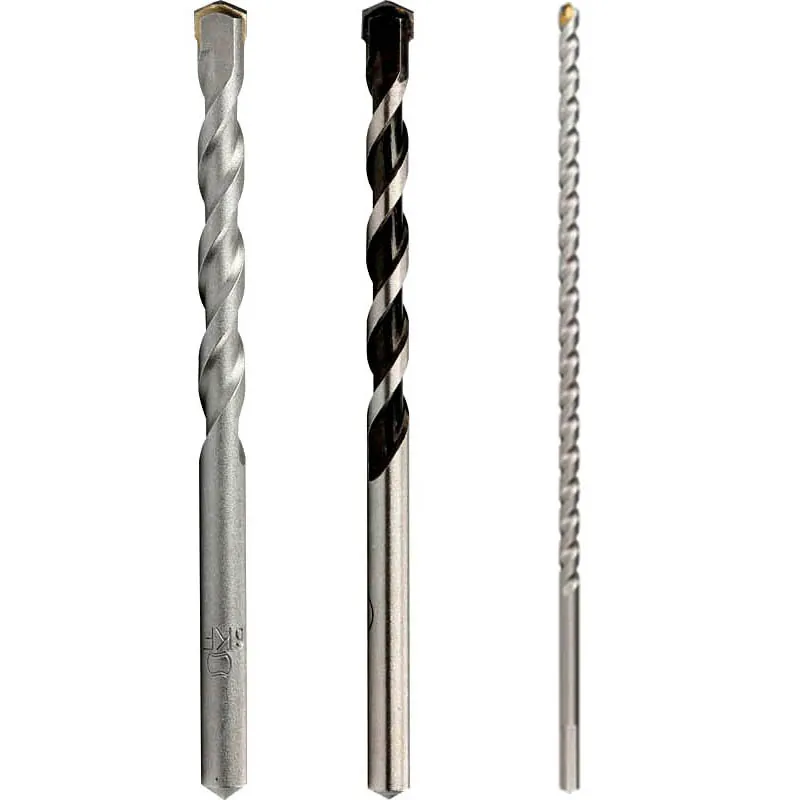
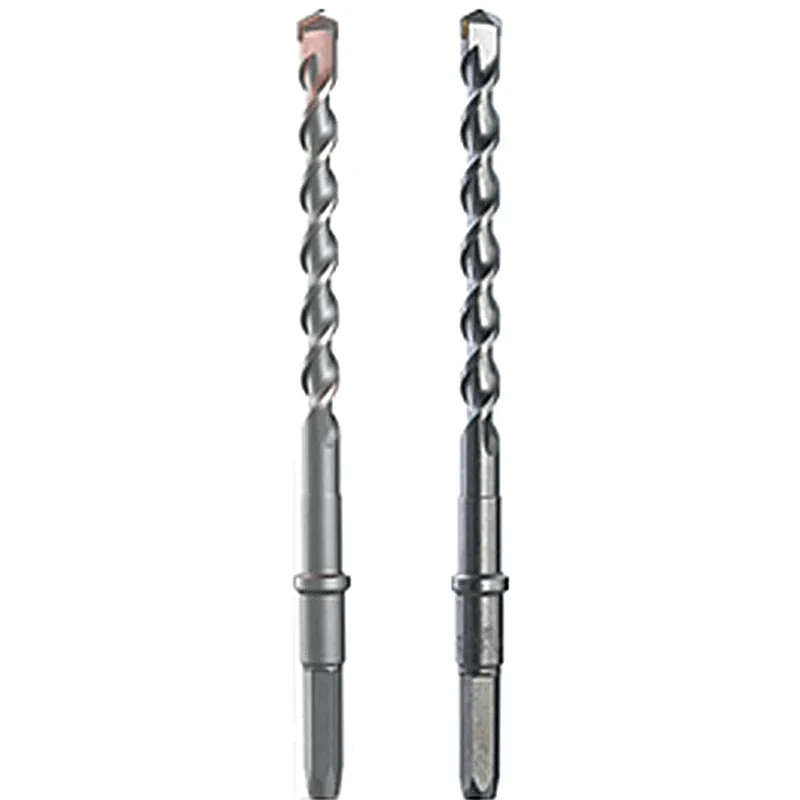
The last column shows which of our series stock that exact metric diameter (SDS Plus = DH01, SDS Max = DH02, Hex shank = DH03, straight-shank impact masonry = DH04). “—” means it is not a standard size in our catalogue.
| Metric bit | Decimal inch | Closest fractional size (twist-drill steps) | Closest common masonry inch size | Difference vs masonry size | Dehui series stocked |
|---|---|---|---|---|---|
| 3 mm | 0.1181” | 1/8” (+0.17 mm) | 1/8” (3.17 mm) | +0.17 mm | Straight |
| 3.5 mm | 0.1378” | 9/64” (+0.07 mm) | 1/8” (3.17 mm) | −0.33 mm | — |
| 4 mm | 0.1575” | 5/32” (−0.03 mm) | 5/32” (3.97 mm) | −0.03 mm | SDS Plus, Straight |
| 4.5 mm | 0.1772” | 11/64” (−0.13 mm) | 3/16” (4.76 mm) | +0.26 mm | — |
| 5 mm | 0.1969” | 13/64” (+0.16 mm) | 3/16” (4.76 mm) | −0.24 mm | SDS Plus, Straight |
| 5.5 mm | 0.2165” | 7/32” (+0.06 mm) | 7/32” (5.56 mm) | +0.06 mm | SDS Plus |
| 6 mm | 0.2362” | 15/64” (−0.05 mm) | 1/4” (6.35 mm) | +0.35 mm | SDS Plus, Hex, Straight |
| 6.5 mm | 0.2559” | 1/4” (−0.15 mm) | 1/4” (6.35 mm) | −0.15 mm | SDS Plus |
| 7 mm | 0.2756” | 9/32” (+0.14 mm) | 1/4” (6.35 mm) | −0.65 mm | SDS Plus, Straight |
| 7.5 mm | 0.2953” | 19/64” (+0.04 mm) | 5/16” (7.94 mm) | +0.44 mm | — |
| 8 mm | 0.3150” | 5/16” (−0.06 mm) | 5/16” (7.94 mm) | −0.06 mm | SDS Plus, SDS Max, Hex, Straight |
| 8.5 mm | 0.3346” | 21/64” (−0.17 mm) | 5/16” (7.94 mm) | −0.56 mm | — |
| 9 mm | 0.3543” | 23/64” (+0.13 mm) | 3/8” (9.52 mm) | +0.52 mm | SDS Plus |
| 9.5 mm | 0.3740” | 3/8” (+0.02 mm) | 3/8” (9.52 mm) | +0.02 mm | — |
| 10 mm | 0.3937” | 25/64” (−0.08 mm) | 3/8” (9.52 mm) | −0.48 mm | SDS Plus, SDS Max, Hex, Straight |
| 11 mm | 0.4331” | 7/16” (+0.11 mm) | 7/16” (11.11 mm) | +0.11 mm | SDS Plus |
| 12 mm | 0.4724” | 15/32” (−0.09 mm) | 1/2” (12.70 mm) | +0.70 mm | SDS Plus, SDS Max, Hex, Straight |
| 13 mm | 0.5118” | 1/2” (−0.30 mm) | 1/2” (12.70 mm) | −0.30 mm | SDS Plus, Hex |
| 14 mm | 0.5512” | 9/16” (+0.29 mm) | 9/16” (14.29 mm) | +0.29 mm | SDS Plus, SDS Max, Hex, Straight |
| 15 mm | 0.5906” | 19/32” (+0.08 mm) | 9/16” (14.29 mm) | −0.71 mm | SDS Plus |
| 16 mm | 0.6299” | 5/8” (−0.12 mm) | 5/8” (15.88 mm) | −0.12 mm | SDS Plus, SDS Max, Hex, Straight |
| 16.5 mm | 0.6496” | 21/32” (+0.17 mm) | 5/8” (15.88 mm) | −0.62 mm | SDS Plus |
| 17 mm | 0.6693” | 21/32” (−0.33 mm) | 11/16” (17.46 mm) | +0.46 mm | — |
| 18 mm | 0.7087” | 23/32” (+0.26 mm) | 11/16” (17.46 mm) | −0.54 mm | SDS Plus, SDS Max, Hex, Straight |
| 19 mm | 0.7480” | 3/4” (+0.05 mm) | 3/4” (19.05 mm) | +0.05 mm | SDS Plus |
| 20 mm | 0.7874” | 25/32” (−0.16 mm) | 13/16” (20.64 mm) | +0.64 mm | SDS Plus, SDS Max, Hex, Straight |
| 22 mm | 0.8661” | 7/8” (+0.22 mm) | 7/8” (22.22 mm) | +0.22 mm | SDS Plus, SDS Max, Hex |
| 23 mm | 0.9055” | 29/32” (+0.02 mm) | 7/8” (22.22 mm) | −0.78 mm | SDS Plus |
| 24 mm | 0.9449” | 15/16” (−0.19 mm) | 1” (25.40 mm) | +1.40 mm | SDS Plus |
| 25 mm | 0.9843” | 31/32” (−0.39 mm) | 1” (25.40 mm) | +0.40 mm | SDS Plus, SDS Max, Hex |
| 26 mm | 1.0236” | 1” (−0.60 mm) | 1” (25.40 mm) | −0.60 mm | SDS Plus |
| 28 mm | 1.1024” | 1-1/8” (+0.57 mm) | 1-1/8” (28.57 mm) | +0.57 mm | SDS Plus, SDS Max, Hex |
| 30 mm | 1.1811” | 1-3/16” (+0.16 mm) | 1-1/8” (28.57 mm) | −1.43 mm | SDS Plus, SDS Max, Hex |
| 32 mm | 1.2598” | 1-1/4” (−0.25 mm) | 1-1/4” (31.75 mm) | −0.25 mm | SDS Plus, SDS Max, Hex |
| 35 mm | 1.3780” | 1-3/8” (−0.08 mm) | 1-3/8” (34.92 mm) | −0.08 mm | SDS Max, Hex |
| 38 mm | 1.4961” | 1-1/2” (+0.10 mm) | 1-1/2” (38.10 mm) | +0.10 mm | SDS Max, Hex |
| 40 mm | 1.5748” | 1-1/2” (−1.90 mm) | 1-1/2” (38.10 mm) | −1.90 mm | SDS Max, Hex |
How to read it
- 8 mm, 9.5 mm, 16 mm and 19 mm sit almost on an inch size (5/16”, 3/8”, 5/8”, 3/4”). These are the safest swaps.
- 6 mm, 10 mm and 12 mm — three of the most common anchor and plug sizes — are each 0.35–0.7 mm away from the nearest inch masonry bit. Swapping them is where most “the anchor spins in the hole” complaints start.
- Above 20 mm the gaps vary between 0.1 and 0.7 mm. At these sizes you are usually drilling for chemical anchors, rebar or pipe penetrations, where the anchor or system data sheet gives a hole size you should follow exactly.
Inch to metric drill bit chart (1/16”–1-1/2”)
Use this when a drawing, anchor box or customer order gives an inch size and you stock metric bits. The last column is the nearest diameter we make as a standard masonry size.
| Inch bit | Decimal inch | Exact mm | Closest metric bit | Difference | Closest masonry size we stock |
|---|---|---|---|---|---|
| 1/16” | 0.0625” | 1.587 mm | 1.5 mm | −0.09 mm | 3 mm (+1.41 mm) |
| 1/8” | 0.1250” | 3.175 mm | 3 mm | −0.17 mm | 3 mm (−0.17 mm) |
| 5/32” | 0.1562” | 3.969 mm | 4 mm | +0.03 mm | 4 mm (+0.03 mm) |
| 3/16” | 0.1875” | 4.762 mm | 5 mm | +0.24 mm | 5 mm (+0.24 mm) |
| 7/32” | 0.2188” | 5.556 mm | 5.5 mm | −0.06 mm | 5.5 mm (−0.06 mm) |
| 1/4” | 0.2500” | 6.350 mm | 6.5 mm | +0.15 mm | 6.5 mm (+0.15 mm) |
| 5/16” | 0.3125” | 7.938 mm | 8 mm | +0.06 mm | 8 mm (+0.06 mm) |
| 3/8” | 0.3750” | 9.525 mm | 9.5 mm | −0.02 mm | 10 mm (+0.48 mm) |
| 7/16” | 0.4375” | 11.112 mm | 11 mm | −0.11 mm | 11 mm (−0.11 mm) |
| 1/2” | 0.5000” | 12.700 mm | 12.5 mm | −0.20 mm | 13 mm (+0.30 mm) |
| 9/16” | 0.5625” | 14.287 mm | 14 mm | −0.29 mm | 14 mm (−0.29 mm) |
| 5/8” | 0.6250” | 15.875 mm | 16 mm | +0.12 mm | 16 mm (+0.12 mm) |
| 11/16” | 0.6875” | 17.462 mm | 17 mm | −0.46 mm | 18 mm (+0.54 mm) |
| 3/4” | 0.7500” | 19.050 mm | 19 mm | −0.05 mm | 19 mm (−0.05 mm) |
| 13/16” | 0.8125” | 20.637 mm | 21 mm | +0.36 mm | 20 mm (−0.64 mm) |
| 7/8” | 0.8750” | 22.225 mm | 22 mm | −0.22 mm | 22 mm (−0.22 mm) |
| 1” | 1.0000” | 25.400 mm | 25 mm | −0.40 mm | 25 mm (−0.40 mm) |
| 1-1/8” | 1.1250” | 28.575 mm | 29 mm | +0.43 mm | 28 mm (−0.57 mm) |
| 1-1/4” | 1.2500” | 31.750 mm | 32 mm | +0.25 mm | 32 mm (+0.25 mm) |
| 1-3/8” | 1.3750” | 34.925 mm | 35 mm | +0.08 mm | 35 mm (+0.08 mm) |
| 1-1/2” | 1.5000” | 38.100 mm | 38 mm | −0.10 mm | 38 mm (−0.10 mm) |
When a near size is fine, and when it is not
| Job | Is a ±0.3 mm substitute OK? | Why |
|---|---|---|
| Pilot holes in wood, clearance holes in sheet metal | Yes | The screw thread or bolt does not depend on the hole wall |
| Plastic wall plugs in brick and block | Usually, if it is smaller — not larger | A larger hole lets the plug spin; a slightly smaller one just needs a firmer tap |
| Concrete screws (Tapcon-type and metric) | No | The thread cuts into the hole wall; the bit size is part of the screw’s rating |
| Wedge, sleeve and drop-in anchors | No | Expansion depends on the hole diameter; oversize holes reduce pull-out load |
| Chemical anchors and rebar | Only within the range the resin data sheet gives | Oversize holes need more resin and change the bond result |
For anchor-by-anchor hole sizes, see our anchor hole size chart. If your project specifies certified holes, our PGM certification guide explains what that tests.
Inch sizes for distributors who sell both systems
Distributors in markets that mix European and American tools (the Gulf, parts of Southeast Asia, Latin America) often carry both. These pairs cover most of the overlap:
- 5/32” ↔ 4 mm (−0.03 mm) and 5/16” ↔ 8 mm (−0.06 mm): treat as the same size.
- 3/16” ↔ 5 mm (+0.24 mm): close enough for plugs, not for 5 mm concrete screws.
- 1/4” ↔ 6 mm / 6.5 mm: 1/4” is 6.35 mm, between the two. Stock both metric sizes if you sell into anchor work.
- 3/8” ↔ 10 mm (−0.48 mm) and 1/2” ↔ 12 / 13 mm: not interchangeable for anchors. Keep separate SKUs.
- 5/8” ↔ 16 mm and 3/4” ↔ 19 mm: near-exact, a single SKU can serve both markets for general drilling.
Our standard range is metric: SDS Plus bits from 4 to 32 mm, SDS Max bits from 8 to 40 mm, straight-shank masonry bits from 3 to 20 mm and hex shank bits from 6 to 40 mm. If your market works in inches, put the inch sizes in your quote request and we will tell you what we can supply.
How the numbers were calculated
Every value is calculated from 1 inch = 25.4 mm (the international inch, exact since 1959). Decimal inches are rounded to four places; differences to 0.01 mm. “Closest fractional size” uses 1/64” steps up to 1/2”, 1/32” steps to 1” and 1/16” above, which matches common twist-drill sets. “Closest common masonry inch size” uses the sizes masonry and SDS bits are normally sold in. The stocked-size column is generated from our current catalogue of 417 SDS Plus, SDS Max, hex and straight-shank SKUs.
FAQ
Frequently asked questions
What is 8 mm in inches for a drill bit?+
8 mm = 0.315 inch. The nearest fractional size is 5/16" (0.3125", 7.94 mm), only 0.06 mm smaller, so an 8 mm and a 5/16" bit are interchangeable for almost every job, including most 5/16" and M8-class fixings — but still use the exact size the anchor data sheet specifies.
What fraction is a 6 mm drill bit?+
6 mm = 0.236 inch, closest to 15/64" (0.234"). In masonry bits, which are not made in 64ths, the nearest inch size is 1/4" (6.35 mm) — 0.35 mm larger. That is too much for a 6 mm wall plug or a 6 mm concrete screw, which will spin or lose grip in a 1/4" hole.
What size drill bit is 5 mm in inches?+
5 mm = 0.197 inch. The nearest fraction is 13/64" (0.203"). In masonry and SDS bits the nearest inch size is 3/16" (4.76 mm), 0.24 mm smaller.
Is 10 mm the same as 3/8 inch?+
No. 3/8" = 9.525 mm, so a 10 mm bit is 0.48 mm larger. The closer fraction to 10 mm is 25/64" (0.391"). For a 10 mm plug or an M8 drop-in sleeve that needs a 10 mm hole, do not drill 3/8".
How do I convert a drill bit size from inches to mm?+
Turn the fraction into a decimal and multiply by 25.4. Example: 7/16" = 0.4375 × 25.4 = 11.11 mm. The closest metric bit is 11 mm. The second table on this page lists every common inch masonry size from 1/16" to 1-1/2" already converted.