
Key Takeaways
- Wedge (through-bolt) anchors: drill bit = anchor diameter. M10 wedge anchor → 10 mm bit; 3/8" wedge anchor → 3/8" bit.
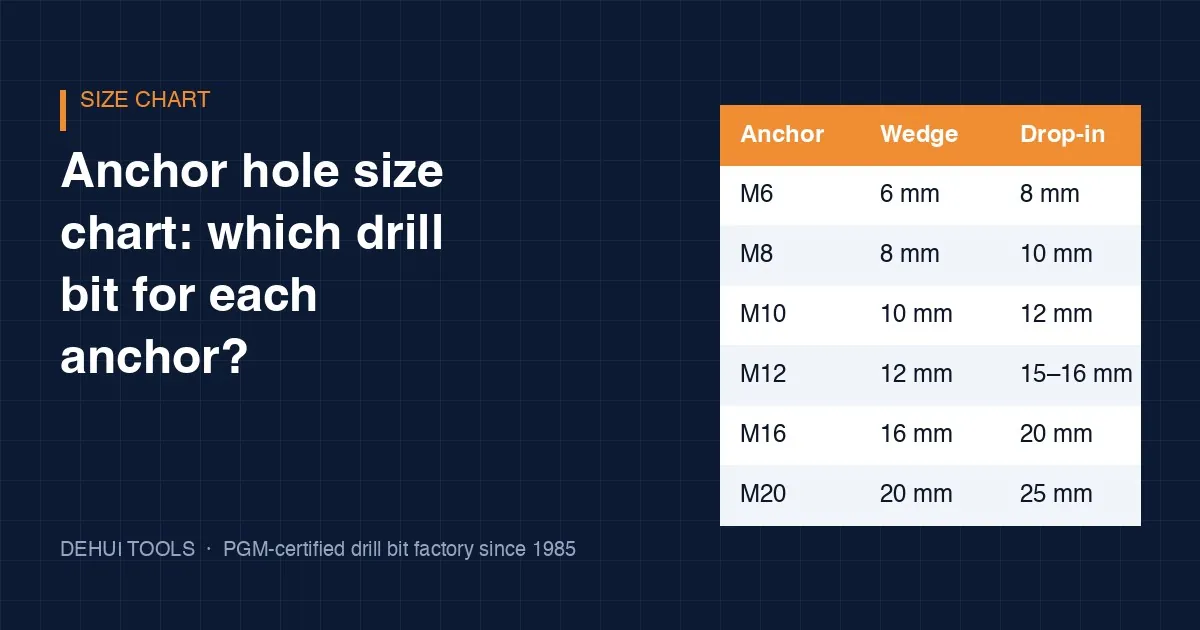
- Drop-in anchors are bigger than their thread: M6 → 8 mm, M8 → 10 mm, M10 → 12 mm, M12 → 15 or 16 mm, M16 → 20 mm, M20 → 25 mm.
- Chemical anchors with threaded rod usually need a hole 2–4 mm larger than the rod (M12 → 14 mm, M16 → 18 mm); rebar needs more. Always take the size from the resin system's ETA or data sheet.
- Tapcon concrete screws use a smaller bit: 3/16" screw → 5/32" bit, 1/4" screw → 3/16" bit. Metric concrete screws are usually named by the hole size.
- Never substitute an inch bit for a metric anchor hole (or the reverse) unless the difference is under about 0.1 mm — 3/8" is 0.48 mm smaller than 10 mm.
Short answer: for a wedge (through-bolt) anchor, use a drill bit the same size as the anchor (M10 → 10 mm, 3/8” → 3/8”). Drop-in anchors need a bigger hole than their thread (M8 → 10 mm, M10 → 12 mm, M12 → 15–16 mm). Chemical anchors need a hole a few millimetres larger than the rod (M12 → 14 mm, M16 → 18 mm). Tapcon-type concrete screws need a smaller bit (1/4” screw → 3/16” bit). The tables below list each type from M6 to M24 and 1/4” to 1”, plus the depth rule and which SDS bit to use.
Last Updated: 2026-10-24
Why the hole matters more than the anchor
An anchor’s load rating is tested in a hole of one specific diameter, drilled with a carbide bit that meets a defined tolerance. Change the hole and you change the result:
- Too big: an expansion anchor has to open further before it grips, so it pulls out at a lower load. A chemical anchor needs more resin than the dose it was planned with.
- Too small: the anchor will not go in to full depth, or a concrete screw snaps during driving.
That is why anchor manufacturers print the hole diameter on every data sheet, and why European anchor approvals assume bits tested to schemes such as PGM. The tables below are the typical values from published manufacturer data. They are a starting point — the anchor’s own data sheet or ETA always wins.
Wedge anchors (through bolts)
Hole diameter = anchor diameter. Drill about 10 mm (1/2”) deeper than the embedment depth so dust has somewhere to go.
| Anchor | Drill bit | Typical SDS system | Our stocked bit |
|---|---|---|---|
| M6 | 6 mm | SDS Plus | DH01, DH04 |
| M8 | 8 mm | SDS Plus | DH01, DH02, DH04 |
| M10 | 10 mm | SDS Plus | DH01, DH02, DH04 |
| M12 | 12 mm | SDS Plus | DH01, DH02, DH04 |
| M16 | 16 mm | SDS Plus or SDS Max | DH01, DH02, DH04 |
| M20 | 20 mm | SDS Max | DH01, DH02, DH04 |
| M24 | 24 mm | SDS Max | DH01 |
| 1/4” | 1/4” (6.35 mm) | SDS Plus | inch size — ask |
| 3/8” | 3/8” (9.53 mm) | SDS Plus | inch size — ask |
| 1/2” | 1/2” (12.7 mm) | SDS Plus | inch size — ask |
| 5/8” | 5/8” (15.88 mm) | SDS Plus or SDS Max | 16 mm is +0.12 mm — confirm with the anchor maker |
| 3/4” | 3/4” (19.05 mm) | SDS Max | 19 mm is −0.05 mm |
| 1” | 1” (25.4 mm) | SDS Max | inch size — ask |
Sleeve anchors
Sleeve anchors are often named by the sleeve diameter, not the bolt inside it. A “12 mm sleeve anchor” usually has an M10 bolt and needs a 12 mm hole. Read the box carefully.
| Sleeve anchor (sleeve Ø / bolt) | Drill bit |
|---|---|
| 8 mm / M6 | 8 mm |
| 10 mm / M8 | 10 mm |
| 12 mm / M10 | 12 mm |
| 16 mm / M12 | 16 mm |
| 20 mm / M16 | 20 mm |
| 1/4”, 5/16”, 3/8”, 1/2”, 5/8”, 3/4” (inch sleeve anchors) | same as the sleeve diameter |
Drop-in anchors
Drop-in anchors are internally threaded, so the hole is larger than the bolt. Drill to the exact depth on the data sheet — too shallow and the setting tool cannot expand the anchor; too deep and it sits below the surface.
| Drop-in anchor (thread) | Typical hole | Note |
|---|---|---|
| M6 | 8 mm | |
| M8 | 10 mm | |
| M10 | 12 mm | |
| M12 | 15 or 16 mm | brands differ — check the box |
| M16 | 20 mm | |
| M20 | 25 mm | |
| 1/4” | 3/8” | |
| 3/8” | 1/2” | |
| 1/2” | 5/8” | |
| 5/8” | 7/8” | |
| 3/4” | 1” |
Chemical anchors (injection resin)
For threaded rod in injection systems the hole is typically 2–4 mm larger than the rod; for rebar it is larger still. The values vary by resin and by approval, so treat these as typical and use the system’s ETA or data sheet for the job.
| Threaded rod | Typical hole | Rebar | Typical hole | |
|---|---|---|---|---|
| M8 | 10 mm | Ø8 | 10–12 mm | |
| M10 | 12 mm | Ø10 | 12–14 mm | |
| M12 | 14 mm | Ø12 | 14–16 mm | |
| M16 | 18 mm | Ø14 | 18 mm | |
| M20 | 22–24 mm | Ø16 | 20 mm | |
| M24 | 26–28 mm | Ø20 | 25 mm | |
| Ø25 | 30–32 mm |
Two things matter more for chemical anchors than for mechanical ones:
- Hole cleaning. Blow, brush, blow — the typical sequence is two blows, two brushes, two blows. Dust left on the hole wall is the most common reason chemical anchors fail pull-out tests.
- Depth. The bond area is the hole wall, so depth is part of the design. Deep holes for rebar (10–20 × the bar diameter) are SDS Max work with long bits; our SDS Max range runs to 1,000 mm overall length.
Concrete screws and wall plugs
| Fixing | Drill bit |
|---|---|
| 3/16” Tapcon | 5/32” |
| 1/4” Tapcon | 3/16” |
| Metric concrete screw “6” / “8” / “10” / “12” / “14” | usually named by the hole: 6 / 8 / 10 / 12 / 14 mm |
| Plastic wall plug 5 / 6 / 8 / 10 / 12 mm | same as the plug: 5 / 6 / 8 / 10 / 12 mm |
Concrete screws cut their own thread, so the bit size is critical. A 1/4” Tapcon in a 3/16” hole drilled with a worn bit (which drills undersize) can snap; the same screw in an oversize hole strips. Metric screws are not universal — some brands name their screws by the thread diameter instead of the hole, so check the box.
Which drill bit to use for anchor holes
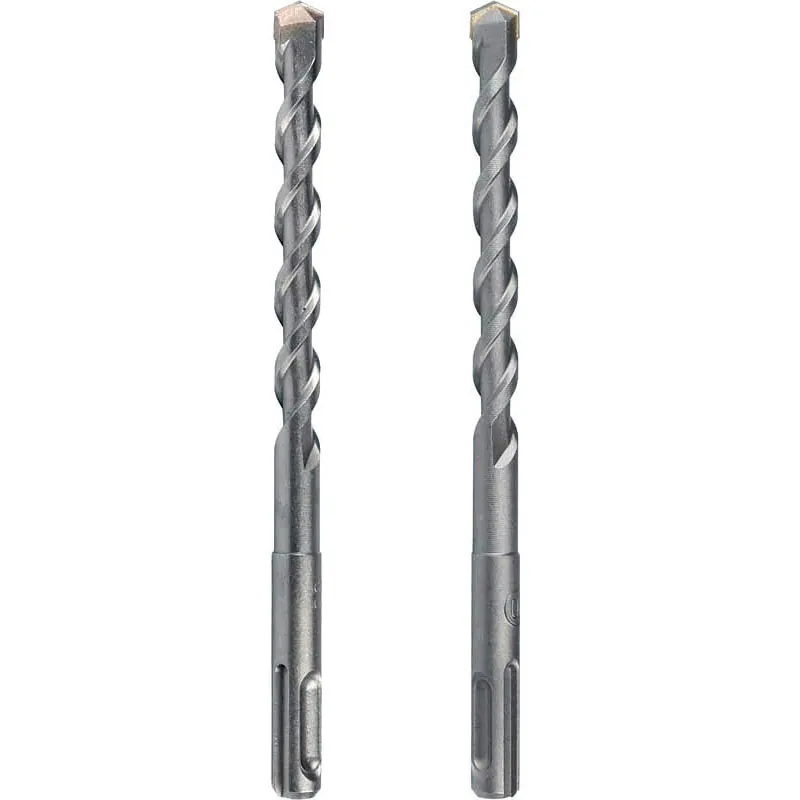
- Up to 16 mm, depths up to about 150 mm: an SDS Plus bit on a 2–4 kg rotary hammer. This covers M6–M12 mechanical anchors, M8–M12 chemical anchors and almost all plugs and concrete screws.
- 16–40 mm, or deep rebar holes: an SDS Max bit on a 5 kg+ hammer. See SDS Plus vs SDS Max for the dividing line.
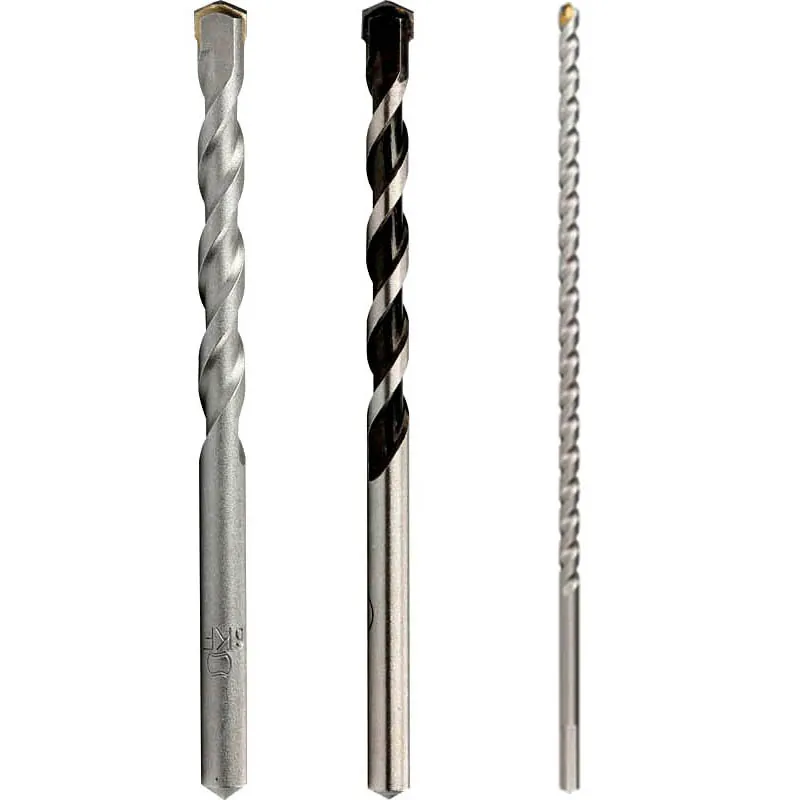
- Straight-shank impact masonry bits for plugs and light anchors with a standard hammer drill, 3–20 mm.
- Cross (4-cutter) heads for reinforced concrete, where a flat tip can jam on rebar and drill an oval hole.
Whichever system you use, the bit has to drill the size it says. A worn tip drills undersize; a badly brazed or off-centre tip drills oversize. Our DH01 (SDS Plus), DH02 (SDS Max) and DH04 (straight-shank impact) series are PGM certified, which is the independent check that the hole stays in tolerance. If you are matching bits to an anchor range you sell, send us the anchor list and we will map each one to a bit size and length.
Converting between inch and metric anchor sizes
The short rule: don’t. An inch anchor needs an inch hole and a metric anchor a metric one. The only near-exact pairs are 5/16” ↔ 8 mm (−0.06 mm), 3/4” ↔ 19 mm (−0.05 mm) and 5/8” ↔ 16 mm (+0.12 mm). Everything else is 0.2–0.7 mm off — enough to matter. The full table is in our drill bit size conversion chart.
Sources and method
Wedge anchor hole sizes follow the general rule in major manufacturers’ installation instructions (for example Simpson Strong-Tie through-bolt data: hole = nominal anchor diameter). Drop-in values are taken from published data sheets (Galleon, Walraven, Allfasteners), which differ at M12 (15 vs 16 mm). Chemical anchor values are typical ranges across injection systems and are not a substitute for the specific ETA. Tapcon bit sizes are from the manufacturer’s published instructions. Our stocked sizes come from our current DH01/DH02/DH04 catalogue.
FAQ
Frequently asked questions
What size drill bit for an M10 anchor bolt?+
It depends on the anchor type. An M10 wedge (through-bolt) anchor needs a 10 mm bit. An M10 drop-in anchor needs 12 mm. An M10 chemical anchor rod typically needs 12 mm. An M10 sleeve anchor is often sold as a 12 mm sleeve and then needs a 12 mm hole — check whether the box gives the bolt size or the sleeve size.
What size drill bit for a 1/2 inch wedge anchor?+
A 1/2" carbide masonry bit. For wedge anchors the hole diameter equals the anchor diameter. Do not use a 12 mm or 13 mm metric bit: 12 mm is 0.7 mm undersize and 13 mm is 0.3 mm oversize.
What size drill bit for a 3/8 drop-in anchor?+
1/2". Drop-in anchors are internally threaded, so the hole is larger than the bolt: 1/4" drop-in → 3/8" hole, 3/8" → 1/2", 1/2" → 5/8", 5/8" → 7/8", 3/4" → 1".
What drill bit size for Tapcon screws?+
3/16" Tapcon screws use a 5/32" bit and 1/4" Tapcons use a 3/16" bit. Use a carbide bit that meets ANSI tolerance; Tapcon boxes usually include one. A worn bit makes the hole too small and the screw snaps; an oversize bit lets it strip.
How deep should I drill an anchor hole?+
At least the anchor's embedment depth plus extra space for dust: about 10 mm (1/2") more for wedge anchors, and to the exact depth on the data sheet for drop-in anchors so the setting tool seats them correctly. Chemical anchors are drilled to the embedment depth the design specifies.
Should I use SDS Plus or SDS Max for anchor holes?+
SDS Plus for holes up to about 16 mm, which covers M6–M12 mechanical anchors and most chemical anchors up to M12. SDS Max from about 16–18 mm upward, for M16–M24 anchors and rebar dowels, especially for deep holes.